
Ultimate Guide on Karats in Gold: Purity and Qualities
When we talk about jewelry, "karats" define the purity of gold. In order to be softer, gold needs other elements to be mixed with to make it durable enough to wear daily. Copper, silver, or zinc are among these elements.
24 Karats – Pure Gold
- Composition: 99.9% Pure Gold.
- Properties: Gold in its most natural state.
- Texture & Resistance: Super soft and malleable. Scratches easily + can be bent with little effort.
18 Karats (18K) – The Luxury Balance
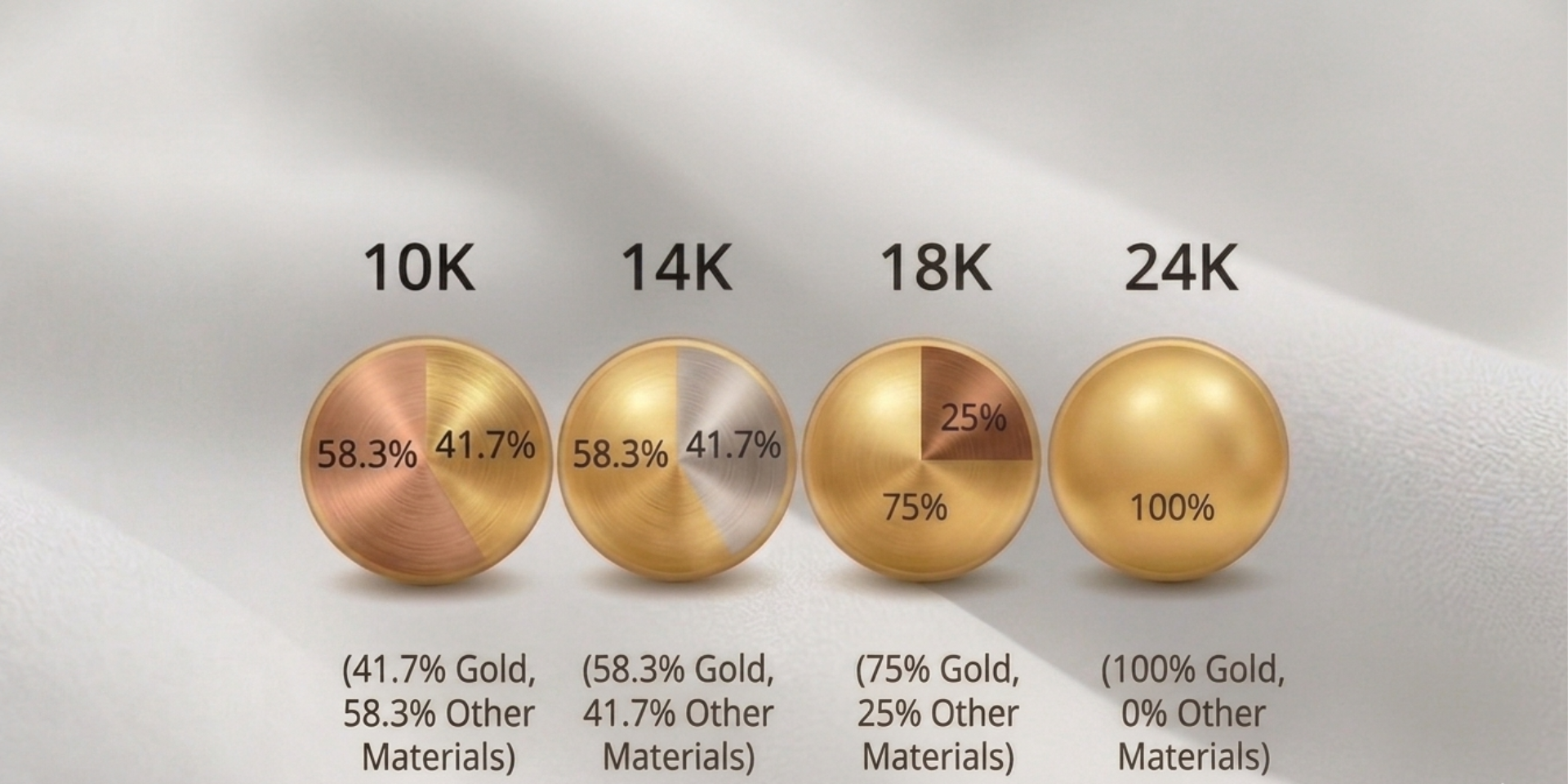
- Composition: 75% Gold + 25% Other Materials.
- Properties: This is the gold standard for fine jewelry.
- Texture & Resistance: High resistance. Price: High; considered a luxury investment.
14 Karats (14K) – The Public Favorite
- Composition: 58.3% Gold + 41.7% Other Materials.
- Properties: The most popular choice for jewelry these days.
- Texture & Resistance: Very high. Because nearly half the piece is made of stronger metals, it is very hard to scratch or bend.
10 Karats (10K) – The Durable Essential
- Composition: 41.7% Gold + 58.3% Other Materials.
- Properties: This is the minimum purity that can legally be called "gold" in many countries. It has a significantly paler tone.
- Texture & Resistance: Maximum Durability. Since it contains more alloy than gold, it is the hardest and most scratch-resistant of all.
| Karat | Gold Purity % | Other Materials % | Resistance / Durability | Color Intensity | Best Use Case |
|---|---|---|---|---|---|
| 24K | 99.9% | 0% | Very Low (Soft) | Deep Orange-Yellow | Investment, Bullion |
| 18K | 75.0% | 25.0% | High | Rich, Vibrant Yellow | Engagement Rings, Luxury |
| 14K | 58.3% | 41.7% | Very High | Warm, Balanced Yellow | Daily Wear, All Jewelry |
| 10K | 41.7% | 58.3% | Maximum | Pale / Light Yellow | Active Wear, Class Rings |
FAQ
What is the difference between Karat (K) and Carat (ct)?
The difference between Karat and Carat comes down to purity versus weight. Karat (with a 'K') measures the purity of gold on a scale from 1 to 24, where 24K is 100% pure gold. Carat (with a 'C' or 'ct') is a unit of weight used exclusively to measure diamonds and other precious gemstones, where one carat equals 200 milligrams.
The difference between Karat and Carat comes down to purity versus weight. Karat (with a 'K') measures the purity of gold on a scale from 1 to 24, where 24K is 100% pure gold. Carat (with a 'C' or 'ct') is a unit of weight used exclusively to measure diamonds and other precious gemstones, where one carat equals 200 milligrams.
What do gold hallmarks like 750, 585, and 417 mean on jewelry stamps?
- 999 Stamp: 24 Karat gold (99.9% pure)
- 750 Stamp: 18 Karat gold (75.0% pure)
- 585 Stamp: 14 Karat gold (58.5% pure)
- 417 Stamp: 10 Karat gold (41.7% pure)
Which gold karat is best for an everyday engagement ring?
14K and 18K gold are the best choices for everyday engagement rings. 14K gold contains 58.5% pure gold, making it highly durable, scratch-resistant, and ideal for active lifestyles. 18K gold contains 75% pure gold, offering a richer, more vibrant yellow color with a more luxurious feel while remaining strong enough for daily wear. While 24K is too soft and bends easily, 10K contains less pure gold and may lack the premium color desired for fine bridal jewelry.
14K and 18K gold are the best choices for everyday engagement rings. 14K gold contains 58.5% pure gold, making it highly durable, scratch-resistant, and ideal for active lifestyles. 18K gold contains 75% pure gold, offering a richer, more vibrant yellow color with a more luxurious feel while remaining strong enough for daily wear. While 24K is too soft and bends easily, 10K contains less pure gold and may lack the premium color desired for fine bridal jewelry.
How do different metal alloys change the color of gold jewelry?
Pure gold is always yellow, but mixing it with specific metal alloys creates different colors:
Pure gold is always yellow, but mixing it with specific metal alloys creates different colors:
- Rose Gold: Created by mixing pure gold with copper. For example, 18K Rose Gold consists of 75% pure gold and 25% copper to achieve its pink hue.
- White Gold: Created by mixing pure gold with white metals like nickel, silver, or palladium. 14K White Gold consists of 58.5% pure gold blended with these silver-colored alloys, and it is traditionally coated in a thin layer of rhodium plating to provide a brilliant, reflective white finish.
Can you have an allergic reaction to 10K or 14K gold jewelry?
Yes, you can have an allergic reaction to 10K or 14K gold if you have a sensitive skin allergy to nickel. Because lower-karat gold (like 10K and 14K) features a higher concentration of alloy metals (58.3% and 41.5%, respectively), they are more likely to contain trace amounts of nickel or copper. If you have sensitive skin, 18K gold and 24K gold offer an excellent, hypoallergenic rating because their high pure gold content heavily minimizes exposure to irritating base metals.
Yes, you can have an allergic reaction to 10K or 14K gold if you have a sensitive skin allergy to nickel. Because lower-karat gold (like 10K and 14K) features a higher concentration of alloy metals (58.3% and 41.5%, respectively), they are more likely to contain trace amounts of nickel or copper. If you have sensitive skin, 18K gold and 24K gold offer an excellent, hypoallergenic rating because their high pure gold content heavily minimizes exposure to irritating base metals.
Does 10K gold tarnish, oxidize, or turn your skin green?
Yes, 10K gold can tarnish or cause skin discoloration over time. While pure gold never tarnishes, the high percentage of non-gold metals (58.3% copper, silver, or zinc) in 10K jewelry can chemically react with oxygen, moisture, skin acidity, and everyday chemicals (like lotions or perfume). This chemical reaction forms a dark layer of oxidation on the metal surface that can leave a temporary green or black mark on your skin.
Yes, 10K gold can tarnish or cause skin discoloration over time. While pure gold never tarnishes, the high percentage of non-gold metals (58.3% copper, silver, or zinc) in 10K jewelry can chemically react with oxygen, moisture, skin acidity, and everyday chemicals (like lotions or perfume). This chemical reaction forms a dark layer of oxidation on the metal surface that can leave a temporary green or black mark on your skin.